Buyer's guide · robot window cleaners
Best Robot Window Cleaner in 2026
Five robot window cleaners worth a 2026 buy: Ecovacs Winbot W2 Pro Omni, Hobot S7 Pro, and the budget alternatives. Pick by window type and edge handling.
Disclosure: We earn commissions from links on this page, as an Amazon Associate we earn from qualifying purchases, at no extra cost to you. This never affects what we recommend. Read our editorial standards →
Ecovacs
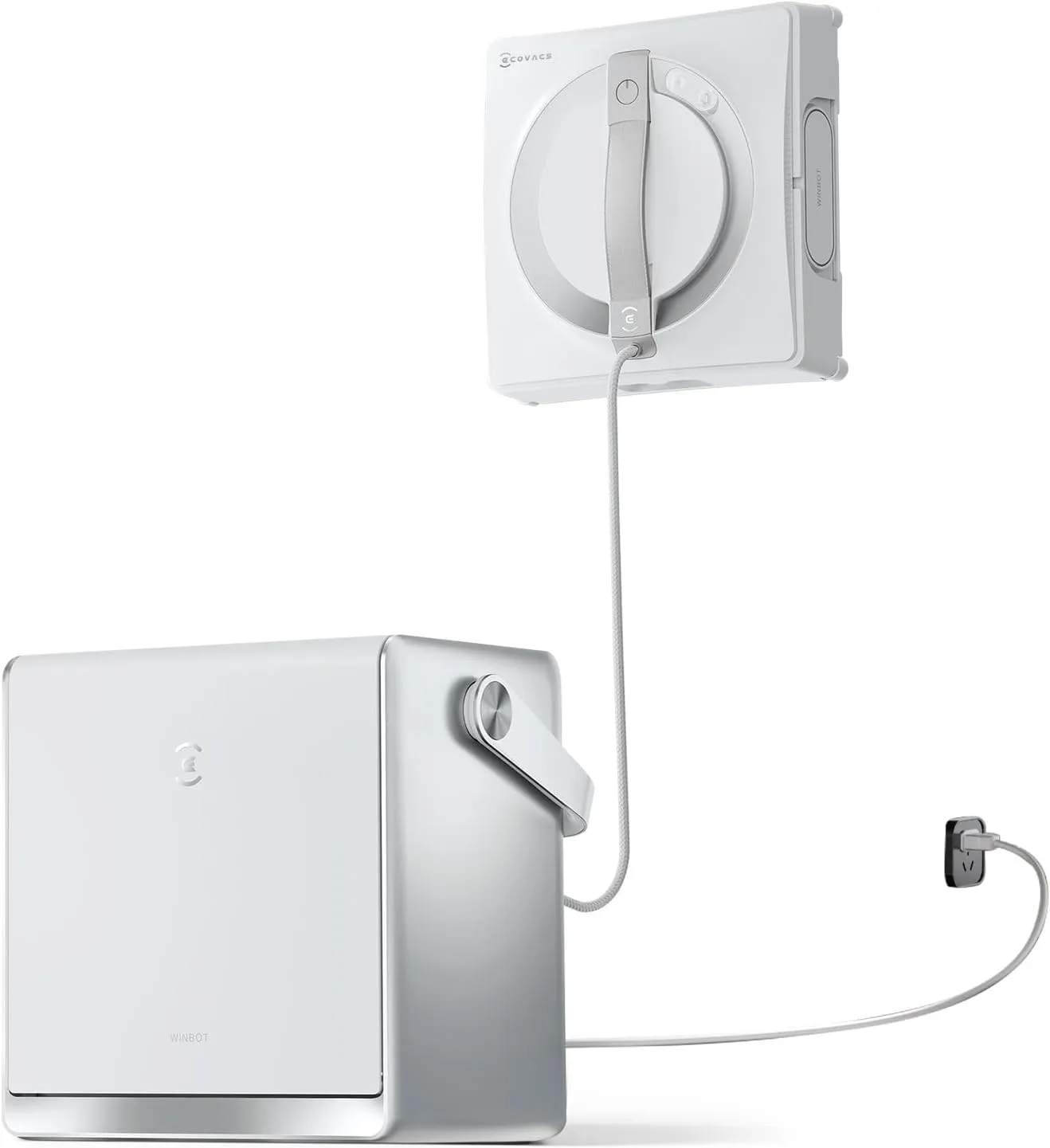
Ecovacs Winbot W2 Pro Omni
Model: Winbot W2 Pro Omni
Window Robot Lab gave it 4.5/5 in their 2026 lab testing, the best cordless window robot they tested. Vendor-confirmed specs: 5,500 Pa max suction, 110-minute battery, WIN-SLAM 4.0 path planning, 12-stage protection (8 hardware-based fall-protection measures, 3-stage intelligent fall protection, plus accidental-damage insurance). The portable Omni station, a 6-in-1 dock with integrated 4,500 mAh battery, automatic safety-rope take-up, and 800N adsorption to hold the unit against the glass during a power loss, is the structural differentiator over the rest of the category. Safety rope is rated to 100kg tensile.
Hobot
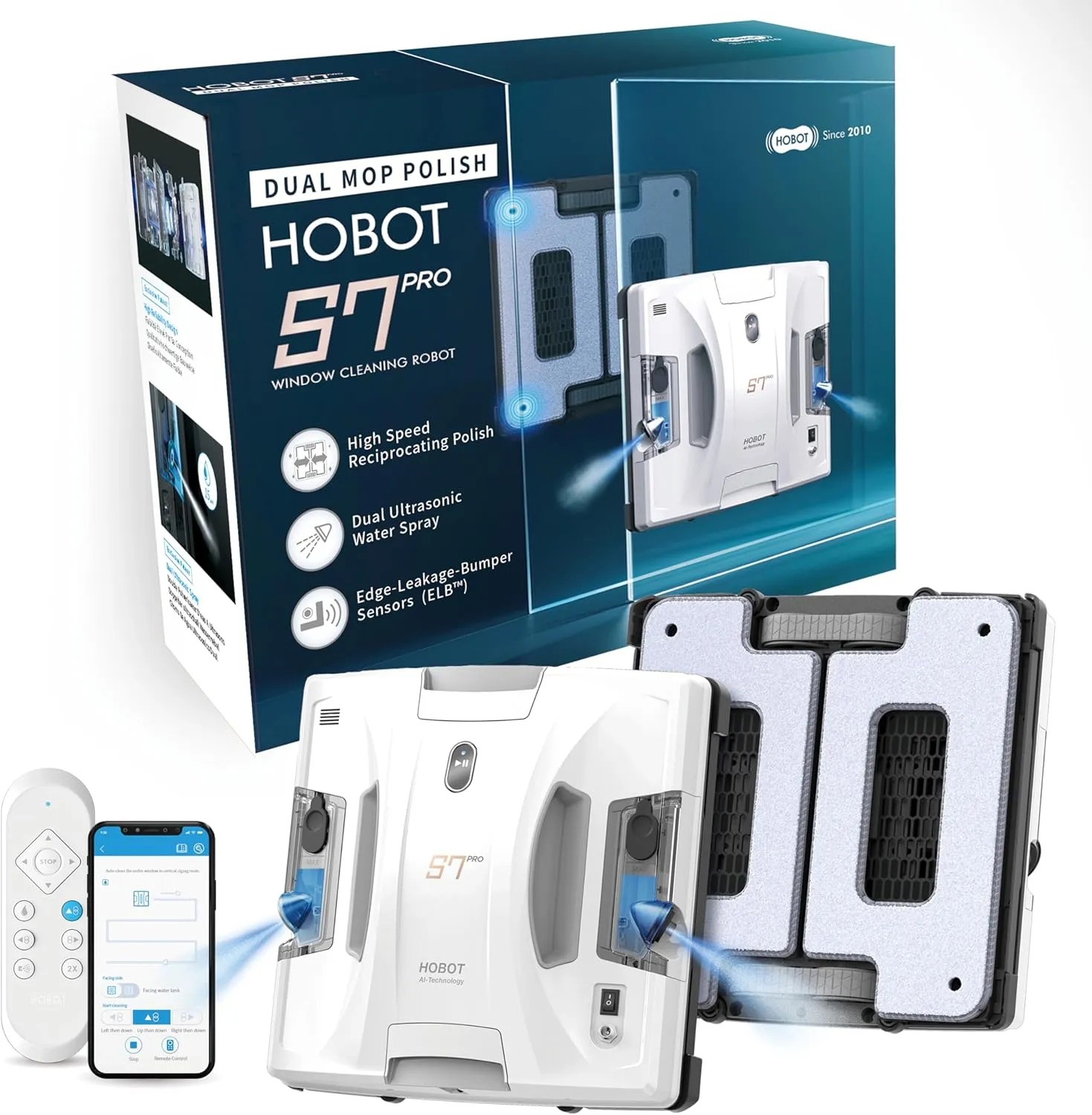
Hobot S7 Pro
Model: S7 Pro
TechRadar and Trusted Reviews both flag the S7 Pro as the top frameless-glass pick in 2026. 4,800 Pa suction, dual ultrasonic spray atomizing water into 15-nanometer mist, edge-leakage bumper sensors that detect glass boundaries before the unit reaches them. Hobot says 1 m² in 2.6 minutes. The structural advantage: Edge-Leakage-Bumper sensors keep the unit on the glass at the edges where most fall risk lives. Caveat: the S7 Pro is not yet listed on Hobot US's official product-family lineup page. It's Amazon-only and reviewer-confirmed for now.
Ecovacs
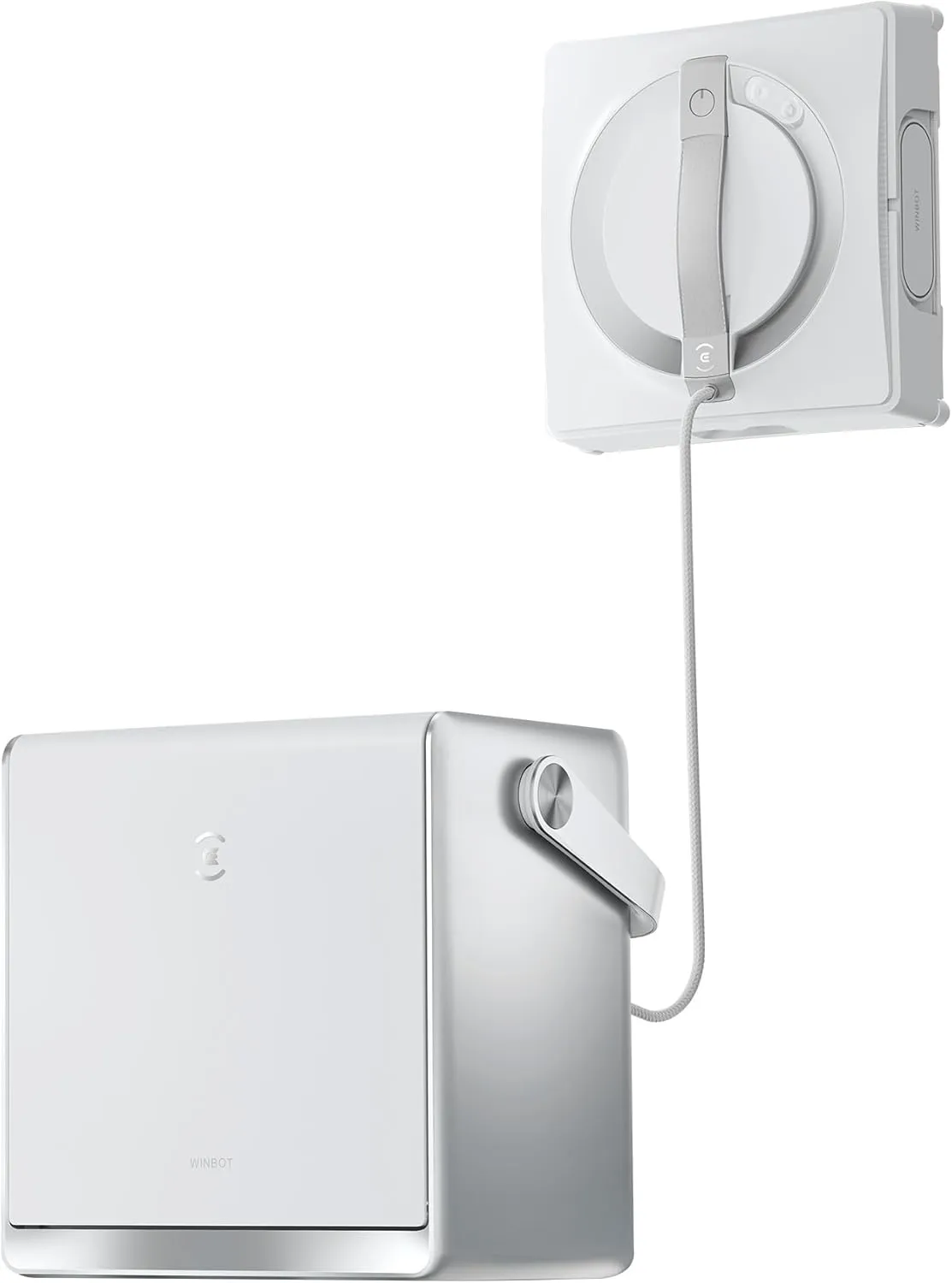
Ecovacs Winbot W2 Omni (non-Pro)
Model: Winbot W2 Omni (non-Pro)
Window Robot Lab's head-to-head verdict: the W2S and W2 Pro Omni leave windows equally clean. If edge performance or streak-free results are your priority, the $180-at-MSRP premium on the Pro Omni ($699.99 Pro vs ~$519 non-Pro/W2S) doesn't buy you a meaningfully better cleaning result. Important pricing note: at current street prices that premium narrows sharply and may flip. The Pro can be cheaper than the non-Pro on a given day. The Window Robot Lab review was written against MSRP; check both products' current prices side-by-side before committing. What you'd give up by stepping down: the portable Omni station and some battery dock convenience. If you can plug in near the window you're cleaning, this is the rational step-down.
Hobot
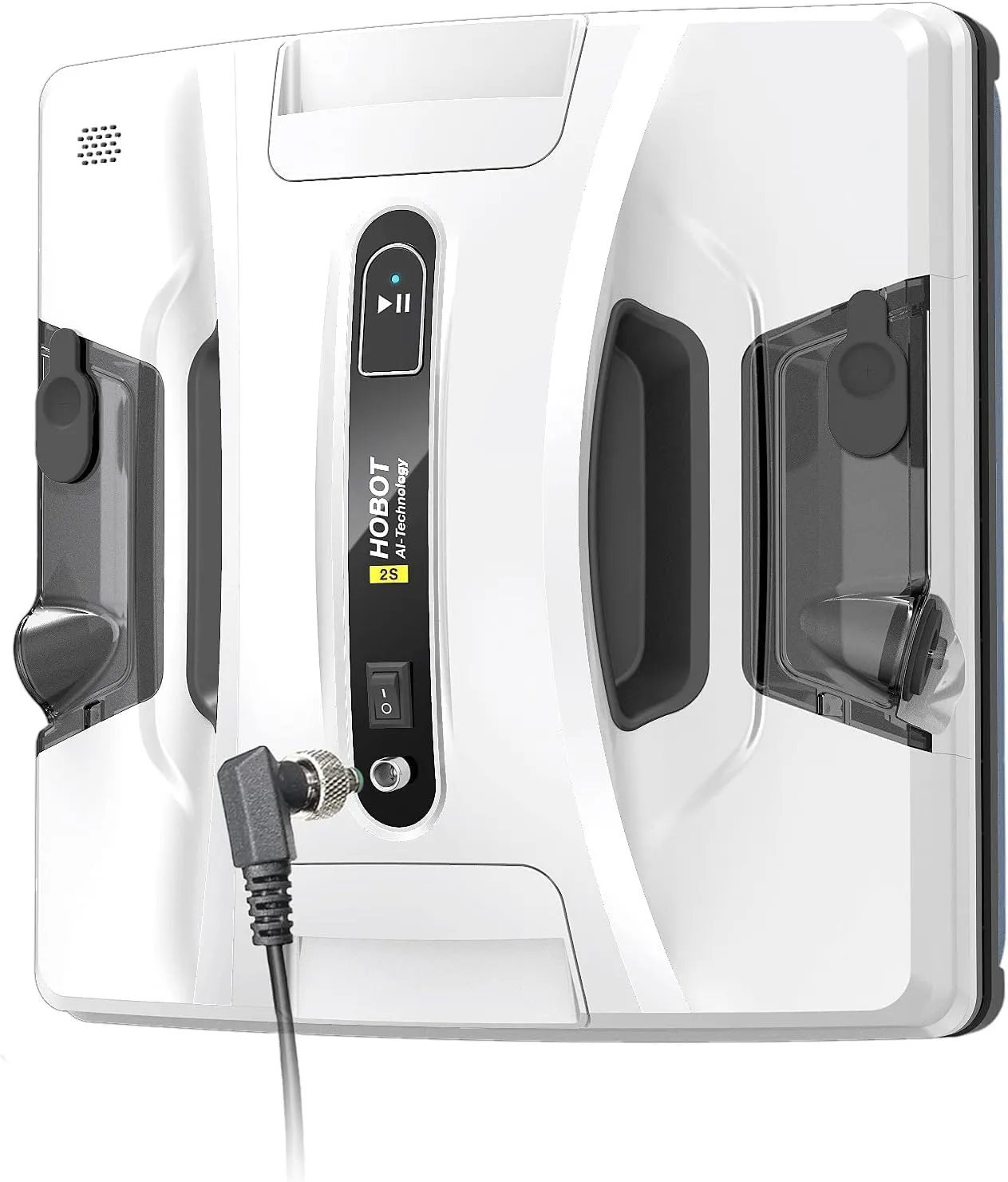
Hobot 2S
Model: 2S
On Hobot's official product family page (where the S7 Pro doesn't appear yet). Dual ultrasonic spray, AI Technology V4 + GIRO sensor, 4 edge-detection lasers, OTA firmware update support, square cleaning pattern (vs the round 388/388 line). Hobot's mainstream pick before the S7 Pro launched. If you want a Hobot at Hobot's traditional reliability and price point, this is the buy.
Ecovacs
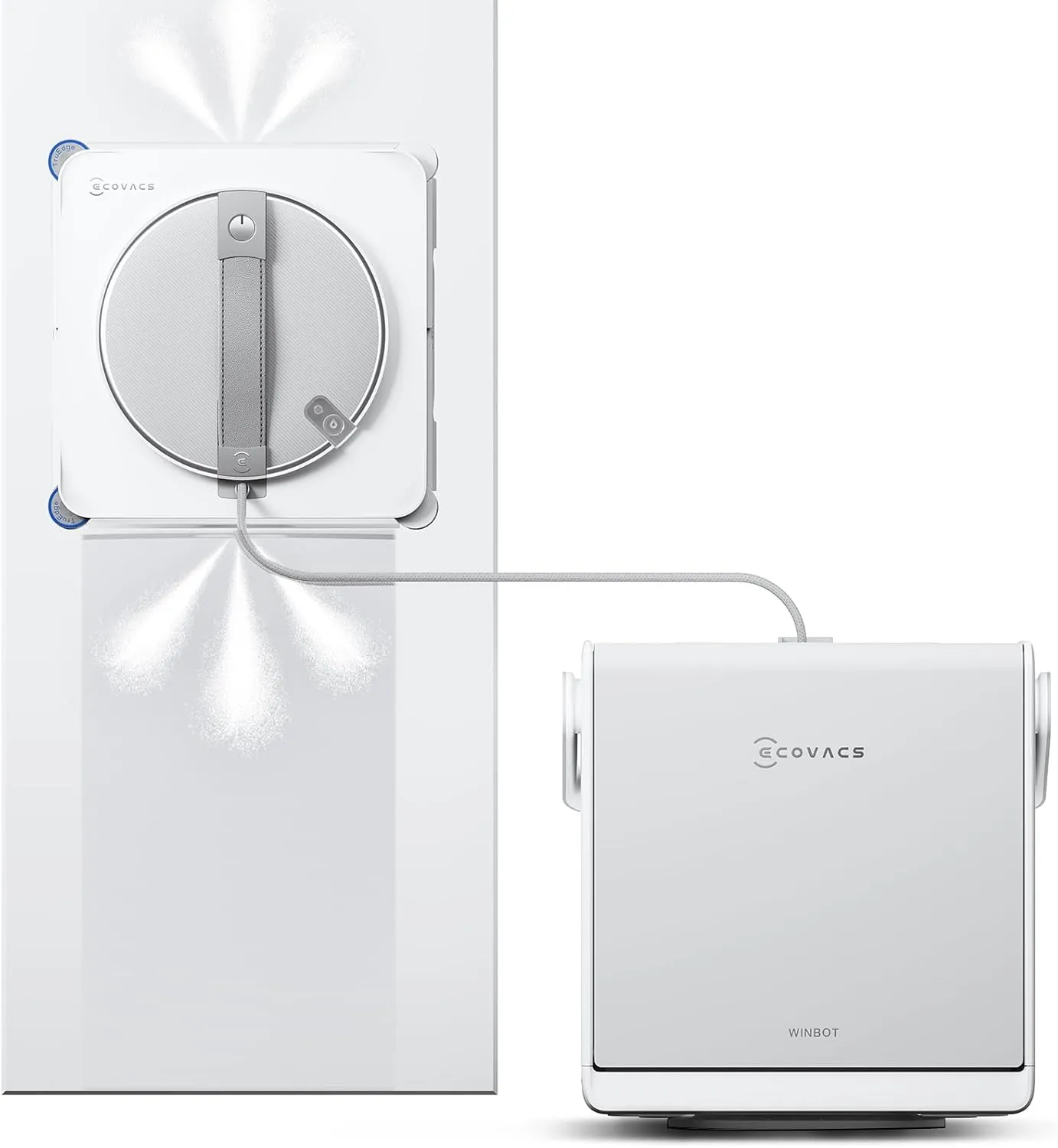
Ecovacs Winbot W2S Omni
Model: Winbot W2S Omni
The S-line variant of the W2 Omni family: 6-in-1 multifunction station, TruEdge edge-to-edge precision, triple wide-angle spray nozzles, 12-level safety system. Window Robot Lab's head-to-head with the W2 Pro Omni concluded the W2S is the most direct value alternative to the Pro: same cleaning result, less dock convenience, lower price. Worth comparing the W2S and W2 Pro on whichever week your purchase window falls in, as sale pricing on Ecovacs's lineup moves often.
Multiple
Mamibot W120-T and no-name imports under $150
Mamibot W120-T is featured on a lot of comparison lists. We couldn't confirm a current verified US price from a defensible source. Aggregator data on it ranges from clearly-wrong (a $17.99 listing surfaced in our research, obviously a comparison-site artifact) to mid-tier ($200-400). Until we can verify a current vendor or retailer price directly, we're not recommending it. No-name Amazon imports under $150 fall in the same bucket: a window cleaner with thin support, no documented safety-rope rating, and unclear battery quality is the wrong category to optimize on price. Spend the extra for a Hobot 2S or hold off.
How we picked
This guide is a synthesis. We surveyed Ecovacs’s and Hobot’s own vendor product pages, Window Robot Lab’s 2026 lab testing, TechRadar’s hands-on reviews of the Ecovacs W2 Pro Omni and Hobot S7 Pro, Trusted Reviews, and aggregator roundups from Airmore and The Consumer’s Guide. We have not personally tested every robot on this list. Where claims are made about suction, battery life, safety mechanisms, or pricing, we cite the source. For the headline specs (suction in Pa, battery runtime, safety rope rating) we verified the number against the manufacturer’s own product page rather than third-party coverage.
We weighted four things: safety-system depth (this is a robot that sits on the outside of your windows, so fall risk is the load-bearing variable), edge and frame handling (especially for frameless glass), dock and battery system (cordless flexibility versus corded simplicity), and independent reviewer consensus (Window Robot Lab’s lab-test data is the most explicit for the category).
What changed in robot window cleaners between 2024 and 2026
Two real shifts.
The dock-with-battery became the differentiator at the premium tier. The Ecovacs W2 Pro Omni’s portable Omni station is a 6-in-1 box that holds the robot, an integrated 4,500 mAh lithium battery, automatic safety-rope take-up, a multi-function control panel, and an extra storage compartment. It solves the biggest workflow pain point in the category: needing a power outlet next to every window you want to clean. Hobot doesn’t ship this kind of dock yet. That’s the structural argument for paying the Ecovacs premium.
Safety system layering matured. The category historically had real fall-from-window concerns. The 2026 premium picks ship redundant safety systems: a 30-minute power-off battery backup that keeps the unit suctioned to the glass after a power loss, a safety rope rated to 100kg tensile (up 20kg from Ecovacs’s prior generation), and on the W2 Pro Omni specifically, accidental-damage insurance against suction failure. Cheaper units without disclosed safety-rope ratings or battery-backup specs are the asymmetric-risk picks. That’s why the Skip section excludes anything we couldn’t verify against a vendor page.
Why the Ecovacs Winbot W2 Pro Omni wins overall
Three reasons in order of importance.
Safety-system depth verifiable from the vendor product page. 5,500 Pa max suction. 800N station adsorption to the glass during power loss. 100kg safety-rope tensile. 30-minute battery backup keeping the unit on the glass after an outage. Window Robot Lab’s lab testing scored it 4.5/5 and called it the best cordless window robot they tested in 2026. Every spec in this paragraph traces back to Ecovacs’s own product page, not aggregator coverage.
The Omni dock is the workflow win. Integrated battery means you don’t need an outlet near every window. Automatic cable management means the safety rope and power cord coil themselves into one tidy unit instead of tangling. The panel has five physical buttons for take-up, on/off, start/pause, mode selection, and return-to-start. This is the part of the product that justifies the premium over the Hobot lineup.
12-stage protection is real and documented, not marketing. Ecovacs breaks it out: 8 hardware-based fall-protection measures (auto air pressure compensation, optimized 5,500 Pa suction, floating cleaning cloth plate, design redundancies), 3-stage intelligent fall protection (gravity acceleration sensor for stability, optocoupler sensor with 0.2-second edge response), and accidental damage insurance against suction failure. We verified the breakdown against the vendor product page.
Why we still recommend Hobot for frameless-glass households
The Hobot S7 Pro’s Edge-Leakage-Bumper sensors detect glass boundaries based on suction interruption rather than visual frame detection, which is the correct mechanism for frameless glass, skylights, and glass railings where there’s no frame to look for. TechRadar and Trusted Reviews both put the S7 Pro at the top of the frameless-glass category in 2026.
The honest caveat: the S7 Pro is not yet on Hobot’s own US product family comparison page. It’s on Amazon with a current listing and the reviewer coverage holds up, but if dealer warranty and parts ecosystem matter to you, register the product directly with Hobot and don’t assume Hobot’s marketing materials reflect the current product set.
When the Ecovacs W2 Omni or W2S is the right buy
Window Robot Lab’s most-quoted finding: the W2S and W2 Pro Omni leave windows equally clean. At MSRP ($699.99 Pro vs ~$519 non-Pro), that’s a $180 premium that buys you the portable Omni station, not better cleaning. The honest update at June 2026 street prices: the Pro Omni has been sitting well under its MSRP on Ecovacs’s own site, while the non-Pro and W2S swing widely by retailer and week. The premium narrows or disappears at street, and on some weeks the Pro Omni is the cheaper buy. The MSRP-era “pay $180 for the dock, not the clean” logic still holds in principle, but you should price-check both before committing, because the math has compressed since the review was written.
When the Hobot 2S is the right buy
Three scenarios. You specifically want a Hobot from Hobot’s own product lineup (not the Amazon-only S7 Pro). You want the AI Technology V4 + GIRO sensor + 4-laser edge detection without paying for the S7 Pro’s dual ultrasonic spray. You want the cheaper of the two Hobots.
The 2S is on Hobot’s official US family page, has OTA firmware updates, and has been reviewed across multiple independent outlets. It’s the Hobot pick when the S7 Pro’s frameless-glass advantage isn’t load-bearing for your home.
Skip these
Mamibot W120-T pending price verification. It’s on the comparison lists. The aggregator pricing we surfaced ranges from clearly-wrong ($17.99, obvious comparison-site error) to mid-tier. Until we can verify a current vendor or retailer price directly, we’re not putting our name on a recommendation.
No-name Amazon imports under $150. Window cleaners aren’t a category to optimize on price. The risk profile is fall-from-window, the mitigation is verified safety-rope rating + battery-backup spec + reviewer confirmation, and units that don’t document those specs are the asymmetric-risk buys.
Older corded-only Hobot models below the 2S. The 188 and 198 are still on Hobot’s product family page but represent earlier-generation hardware. Unless you specifically need a smaller-window or smaller-budget pick and can’t stretch to the 2S, the newer models cover the same job at meaningfully better safety and intelligence.
Who should skip this category entirely
You have 4 windows you clean once a year. A bucket and a squeegee at $25 covers you for a decade.
You have a single-story home where you can comfortably reach every window from outside. Robot window cleaners shine specifically for windows that are inconvenient or unsafe to reach: second-story exteriors, sunrooms with vaulted glass, skylights. Reachable windows don’t justify the robot premium.
You’re sensitive to noise. The W2 Pro Omni runs as low as 63 dB and as high as 76 dB depending on mode. That’s quieter than older generations but still audible, louder than a robot vacuum and in the same range as a dishwasher.
For everyone else with high or hard-to-reach windows: 2026 is a credible buying window for the category, with safety systems mature enough to recommend at the top end.
Frequently asked questions
Are robot window cleaners actually safe? They sit on outside walls.
Cordless vs corded: which should I buy in 2026?
Were there any CPSC recalls on robot window cleaners I should know about?
Frameless glass vs framed: does it matter?
Why isn't the Hobot S7 Pro on Hobot's own product comparison page?
How often will I actually use one of these?
Sources
Every claim in this guide that isn't first-person experience is traceable to one of the sources below. URLs verified at publication; some may rot. Let us know if so.
- WINBOT W2 PRO OMNI product page · Ecovacs USVendor source for 5,500 Pa max suction, 110-min battery, 800N adsorption, 100kg safety-rope tensile, 12-stage protection breakdown, and the current vendor price.
- Hobot home cleaning robots: product family · HobotVendor lineup page listing 188/198/268/288/298/2S/388. Confirms which Hobot models are on the official US comparison page, and surfaces that S7 Pro is not yet listed there.
- Ecovacs Winbot W2 Pro Omni review (lab tested) · Window Robot Lab, 2026Source for the 4.5/5 lab score and 'best cordless window robot' verdict.
- Ecovacs Winbot W2S vs W2 Pro Omni: Honest Comparison · Window Robot Lab, 2026Source for the verdict that the $180 Pro Omni premium 'doesn't buy you anything extra' on cleaning result vs the W2S.
- The Ecovacs Winbot W2 Pro Omni review · TechRadar, 2026
- Hobot S7 Pro window cleaning robot review · TechRadarSource for the S7 Pro 'top-rated for frameless glass' framing.
- Hobot S7 Pro Review · Trusted Reviews
- Top 6 Robotic Window Cleaners of 2026 · Airmore, 2026
- 10 Best Robot Window Cleaners of 2026 · The Consumer's Guide, 2026
- Ecovacs Winbot W2 Pro Omni hits $399 at Amazon · 9to5toys, April 29, 2026Pricing context. Confirms the street figure is credible, not a one-off.
- Wybotics Recalls Robotic Pool Vacuums Due to Burn and Fire Hazards · U.S. Consumer Product Safety Commission, 2026Cited for completeness in the recall context FAQ. Adjacent product category (robot pool vacuums, not window cleaners), but worth surfacing as evidence the broader robot home-appliance category has active CPSC oversight.
- Hobot 2S review · GadgetGuy
- Hobot robot family review · Robocleaners