Buyer's guide · robot vacuums
Best Robot Vacuum for Pet Hair in 2026
A synthesis of what RTINGS, Tom's Guide, Vacuum Wars, Consumer Reports, and 2,760 Reddit owner reports say about robot vacuums for pet hair, and where they disagree.
Disclosure: We earn commissions from links on this page, as an Amazon Associate we earn from qualifying purchases, at no extra cost to you. This never affects what we recommend. Read our editorial standards →
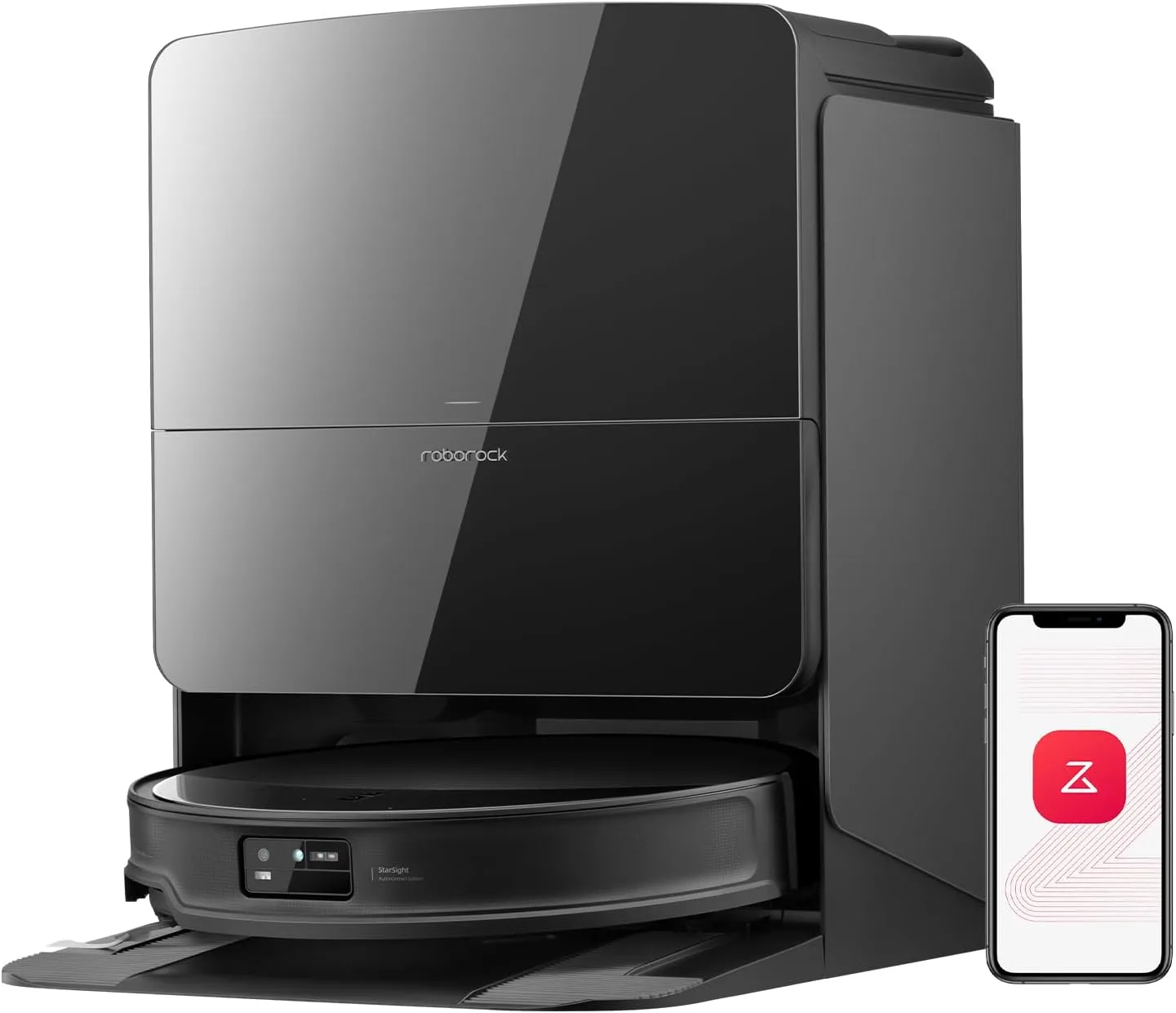
Roborock
Roborock Saros 10R
Model: Saros 10R
Top pick at RTINGS and Tom's Guide for pet hair (Tom's measured 98% on carpet, 100% on hardwood). But surface the divergence: TechGearLab measured only 56% carpet pickup, and RTINGS' own head-to-head says the MOVA P50 Pro Ultra outperforms it specifically on pet hair. Best 'safe' default if you want a flagship with broad support; not necessarily best for pet hair alone.
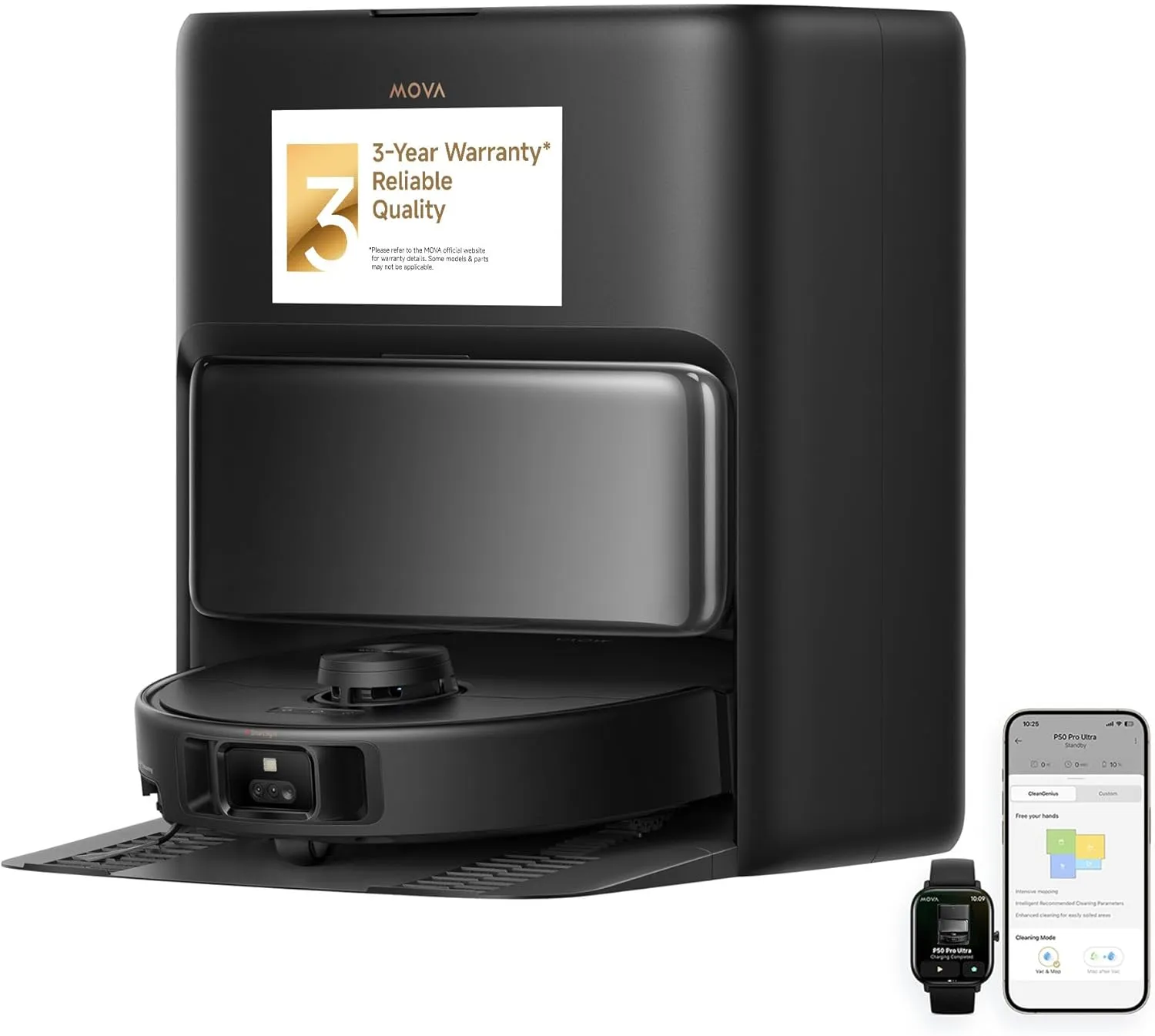
MOVA (Dreame sub-brand)
MOVA P50 Pro Ultra
Model: P50 Pro Ultra
RTINGS' direct comparison: 'MOVA P50 significantly outperforms the Saros 10R when it comes to pet hair pickup and carpet cleaning.' Vacuum Wars' 7-inch tangle test recorded 0% brush wrap. Caveat: MOVA is a newer Chinese sub-brand of Dreame with a thinner long-term US support track record than Roborock or Eufy. The support-continuity flag we put on iRobot applies here in a different form. The measured pet-hair performance is strong; the multi-year reliability and parts-availability story is unproven. Worth considering if pet hair on carpet is the criterion that matters most and you're comfortable being closer to the bleeding edge on support.
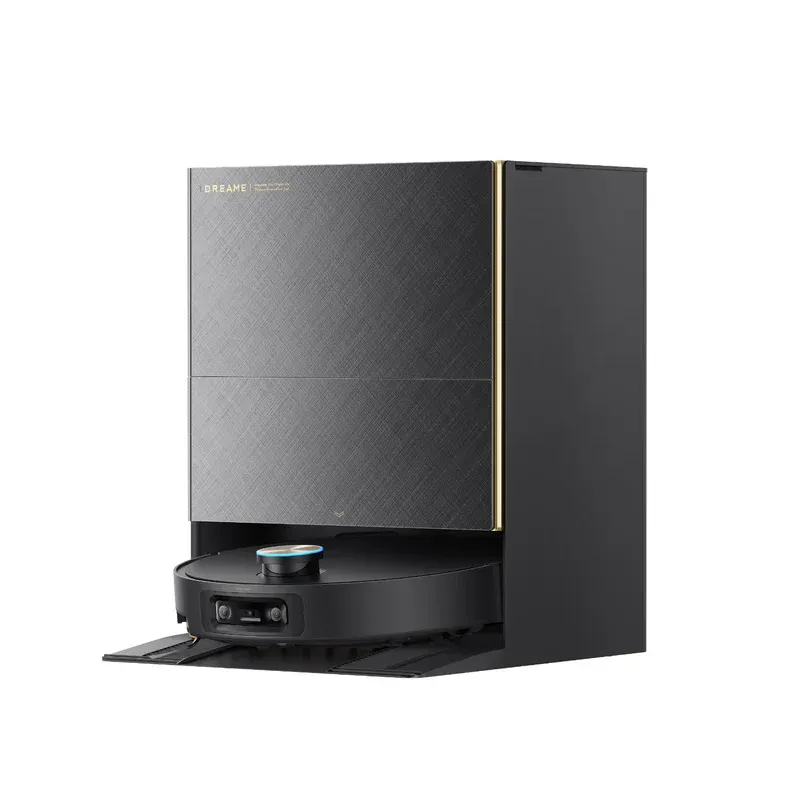
Dreame
Dreame X60 Max Ultra Complete
Model: X60 Max Ultra Complete
Vacuum Wars (most rigorous public methodology of any reviewer: they buy every unit, take no sponsorships, run measured tangle and pickup protocols) ranks this their #1 overall as of May 2026, with a 4.91/5 pet score. Different reviewer's top pick than RTINGS / Tom's Guide. Worth knowing about; worth considering if you want the latest flagship rather than the most-reviewed one.
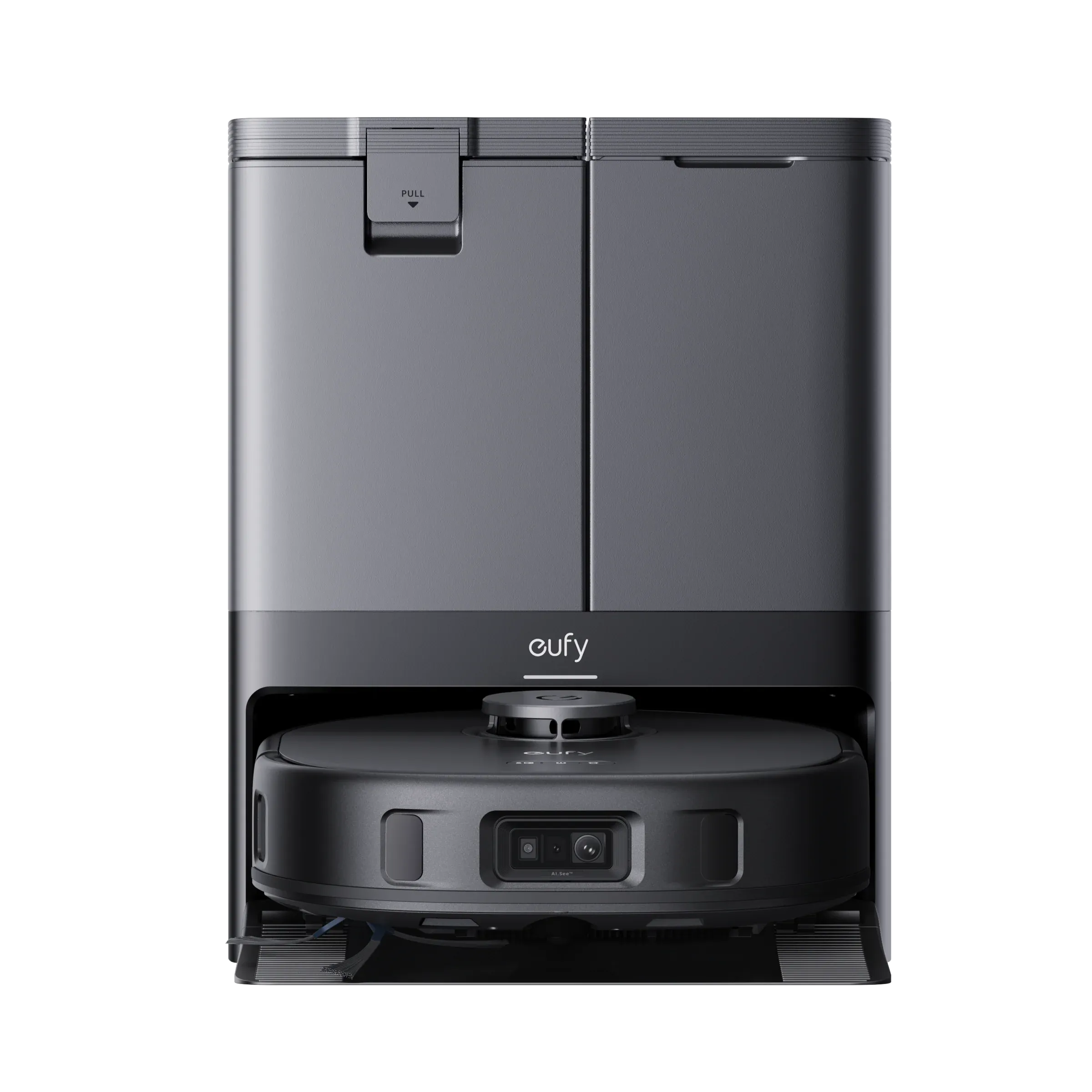
Eufy (Anker)
Eufy X10 Pro Omni
Model: X10 Pro Omni
Flagship features without flagship money. The catch: the stock main brush mixes rubber and bristles and tangles long hair; multiple reviewers (Tom's Guide, Homes & Gardens) flag this. Eufy sells a $19.99 bristle-free replacement roller that fixes it. Buy the replacement when you buy the vacuum, or the unit's pet-hair performance will disappoint.
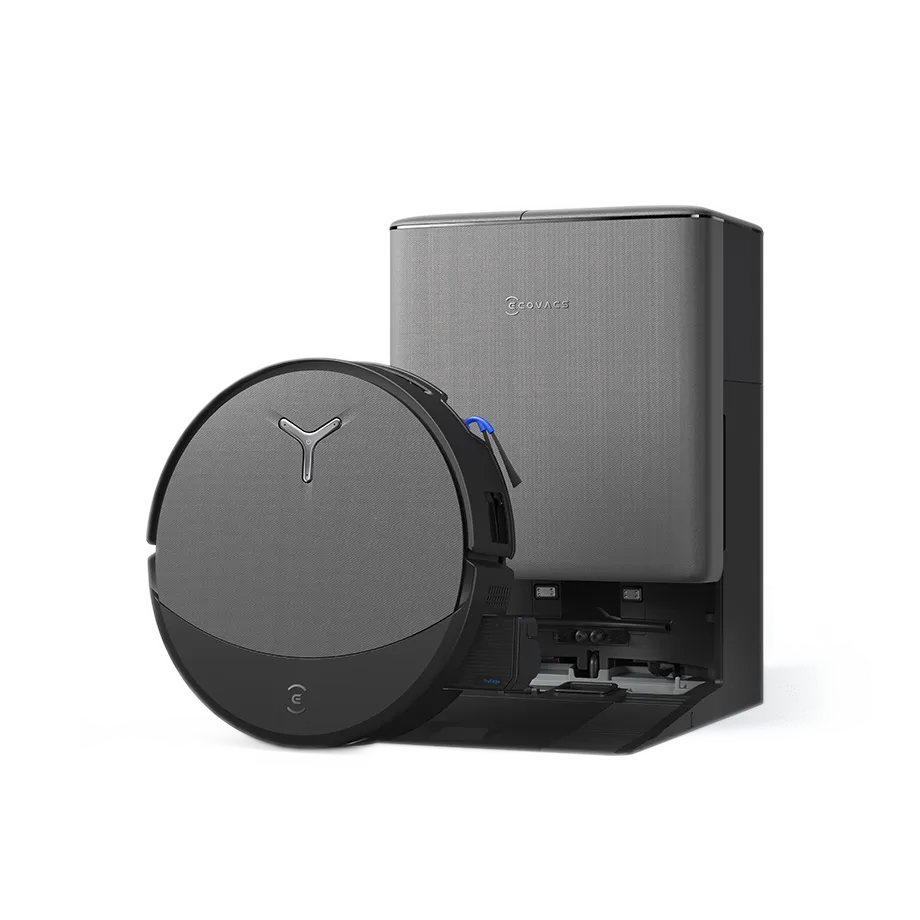
Ecovacs
Ecovacs Deebot T90 Pro Omni
Model: Deebot T90 Pro Omni
Vacuum Wars' Best Value pick for June 2026. Their measurement: 100% pet hair pickup vs. an 82% category average, using the ZeroTangle 4.0 brush. If the Eufy's bristle-mix gives you pause, this is the next step up without paying flagship pricing.
MOVA
MOVA E50 Ultra
Model: E50 Ultra
MOVA's current budget Ultra and the cheapest way into a self-emptying, hot-water mop-washing dock from a Dreame sub-brand. It brings strong suction for the price and a sealed dock that handles weeks of pet hair, at roughly a third the cost of a Saros 10R. The trade-offs are a smaller dock bag, a less polished app, and MOVA's still-short support track record next to Roborock or Eufy. It steps into this slot now that the older P10 Pro Ultra is discontinued. The measured value is strong; treat the long-tail support as unproven.
What changed in 2026
The robot vacuum category just had a real generation shift. The Roborock Saros 10R, Roborock Saros 20, Dreame X60 Max Ultra Complete, MOVA P50 Pro Ultra, and Ecovacs Deebot T90 Pro Omni are the current flagships. They all use either split-rubber or dual-rubber brush designs that reduce hair tangling to near zero on the most rigorous independent tests. The 2024 flagship, the Roborock S8 MaxV Ultra, is still being sold, often heavily discounted, but it is no longer the top tier.
Two things this generation got right that the last one didn’t.
Brush design has converged. Vacuum Wars’ May 2026 round notes that “four of the top five [in the 7-inch tangle test] achieved perfect scores in preventing hair tangles,” including the MOVA P50 Pro Ultra and the Roborock Saros 10R. Anti-tangle is no longer a premium feature; it’s the new floor.
Suction Pa marketing has peaked. The 2026 flagship range runs from about 19,000 Pa on the MOVA P50 Pro Ultra up to 36,000 Pa on the Roborock Saros 20. The functional difference between those and a 6,000 Pa vacuum on pet-hair pickup is small. Tom’s Guide explicitly recommends about 5,000 Pa as adequate for pet hair. Vacuum Wars’ measurements show budget models can outperform premium ones on carpet pickup despite lower spec sheets. The honest takeaway: ignore Pa numbers, look at independent measured pickup.
The disagreement that matters
If you read one robot vacuum review and trust it absolutely, you’ll likely buy the Roborock Saros 10R, because Tom’s Guide and RTINGS both name it as their top pick. We unpack the full divergence, and where the Saros 10R genuinely leads the category, in our deep review of the Saros 10R.
But reading more than one review surfaces a real fault line.
TechGearLab measured only 56% carpet pet-hair pickup on the Saros 10R, versus Tom’s Guide’s 98%. RTINGS’ own head-to-head comparison tool states that the MOVA P50 Pro Ultra “significantly outperforms the Saros 10R when it comes to pet hair pickup and carpet cleaning.”
That looks like two reviewers measuring the same thing and wildly disagreeing. They aren’t.
Tom’s Guide’s protocol is published: 2 grams of pet hair scattered across a defined 5×5-foot carpet section, single test pass, pickup measured against starting weight. TechGearLab’s specific carpet-pet-hair protocol is less explicitly documented, but their review reads as a deeper-embedded-debris measurement on a defined pile, with a different starting condition, different test surface, and almost certainly different hair length and quantity. RTINGS’ methodology is published in detail and is different again. They grade across multiple carpet types and weight a composite score.
So the 98% and the 56% are not contradictory measurements of the same thing. They are measurements of different things: surface pet-hair pickup on one defined carpet vs. deeper-embedded pickup on another. The divergence is between protocols, not between the vacuums on a fixed test.
What that means for a buyer: the headline “X% pet hair pickup” number from any reviewer is only as useful as the protocol behind it, and the major reviewers do not standardize. A reviewer who reports 98% on one test and 56% on another isn’t necessarily inconsistent; the tests are not the same test. This is why Vacuum Wars’ methodology (fixed test surface, fixed hair quantity, fixed hair length, fixed number of passes) is the most useful for cross-product comparison, even when their unit absolute numbers differ from a Tom’s Guide or a TechGearLab.
Practical takeaway: the Saros 10R is the safest flagship choice with the broadest reviewer support; the MOVA P50 Pro Ultra is the more defensible pet-hair-specific pick when RTINGS’ own database is the tiebreaker; and any guide that names a single “best for pet hair” without naming whose protocol they’re trusting is leaving the most important context on the table.
Why brush design beats suction
This is the single most useful insight in the category and the one that consistently fails to surface in vendor marketing.
Vacuum Wars’ 2024 measurement round recorded the Roborock Qrevo MaxV, a high-suction premium model, at 50% carpet pet-hair pickup. The Eufy S1 Pro, Eufy’s flagship at the time, scored about 65%. The Eufy L60, a budget model, scored 100%. The premium vacuums weren’t beating the budget one. The differentiator is carpet contact, brush geometry, and roller construction, not suction.
Tom’s Guide’s general guidance is that approximately 5,000 Pa of suction is enough for pet hair. The marginal benefit of more Pa drops sharply above that. And because Pa is not standardized across brands, a “22,000 Pa” Roborock isn’t directly comparable to a “20,000 Pa” Dreame.
What does matter: split rubber rollers that channel hair toward a center gap (Roborock’s DuoDivide), dual-rubber designs that don’t grip hair the way bristle helices do, and brush bars that physically sit close to the carpet pile. These features show up in the flagship models we’ve named above, plus in some surprising budget picks like the Ecovacs Deebot T90 Pro Omni.
The iRobot situation
Roomba is the household-name brand in robot vacuums. It’s worth knowing exactly what happened with the company.
iRobot filed a prepackaged Chapter 11 bankruptcy on December 14, 2025 and emerged from bankruptcy on January 23, 2026 under new ownership (SEC 8-K, January 2026). Shenzhen Picea Robotics, iRobot’s long-time China-based contract manufacturer, took 100% of the equity. Common shareholders were wiped out and the stock delisted from Nasdaq. Picea has discontinued its own 3i-branded robot vacuum line to focus its resources on Roomba going forward.
That’s a meaningful distinction from “iRobot went under.” The company still ships product. Apps still function. Warranties continue. Customer service is operating. 2026 product development is reportedly ongoing. What changed is the ownership structure and the country of operational center, not the brand’s existence.
The buyer-relevant question is ownership and support-continuity risk over a 5-year purchase window, particularly for app and cloud features, where a future owner’s product roadmap is the variable that matters most. Reddit owner sentiment, aggregated by RedditRecs across 668 users, is 57% positive for iRobot, the lowest of any major brand tracked. Roborock, Dreame, MOVA, Eufy, and Shark all sit between 71 and 77 percent positive.
The Roomba j9+ and Combo j9+ are still legitimate vacuums on pet hair. Wirecutter rates the j9+ as their zero-tangle pick, and the Combo 10 Max performs above average for a mop-equipped robot because its mop pad lifts out of the way for carpet. The hardware works. The brand trajectory is the asterisk.
Skip these
- Older Roomba 600 and 700 series. Bristle-and-beater brush design tangles long hair catastrophically. Vacuum Wars’ 7-inch tangle test shows these picking up nearly 100% of hair into the brush bar, not into the bin. They’re still sold at discount. For a shedding-pet household they are worse than no robot.
- Eufy X10 Pro Omni without buying the replacement brush. The stock brush is rubber-plus-bristles and wraps long hair. The $19.99 bristle-free roller replacement fixes it. Buy them together.
- Eufy S1 Pro at premium pricing. Vacuum Wars’ 2024 round had it at 65% carpet pet-hair pickup despite flagship positioning. Don’t pay $1,500 for it.
- Dyson 360 Vis Nav for high-shed households. Consumer Reports rates its pickup well, but it has no self-empty dock and no mop. For a heavy-shed home that’s a meaningful daily-effort tax.
- Roborock Qrevo Curv 2 Pro for US buyers. It tests well: TechRadar measured 87% pet-hair pickup, but it isn’t officially sold in the US. Grey-market import means no US warranty. The US-distributed Qrevo Curv (original) is the closest sanctioned alternative.
Who should skip this category
A robot vacuum is labor reduction, not labor elimination. A 1,200-square-foot apartment with one short-haired pet and mostly hardwood floors doesn’t need a $1,000 robot vacuum to manage; a $30 dust mop and 15 minutes per week does the job. The math gets better with multiple pets, larger floor area, more carpet, or longer pet coats.
For high-shed homes with mixed carpet and hardwood and pets that leave visible hair within 24 hours of vacuuming: yes, this category earns its money in 2026. The Saros 10R or MOVA P50 Pro Ultra at the top and the Eufy X10 Pro Omni or MOVA P10 Pro Ultra at the value tier are the picks worth shortlisting.
How to verify before you buy
Specifications drift. Prices drift faster. The two things to confirm before purchase:
- Current Amazon price for the specific variant you’re picking. ASINs link to specific bundle/dock configurations and different configurations carry different prices. Click through to the listing and confirm the dock and accessories match what you want.
- The actual reviewer ranking as of your purchase month. The 2026 flagship lineup is moving fast. At least one new flagship has shipped in every month of 2026. Check Vacuum Wars’ monthly refresh or RTINGS’ best-of page before you commit.
Frequently asked questions
Which one is actually best for pet hair?
How much does suction (Pa) actually matter?
What's going on with iRobot? Should I still buy a Roomba?
What about the Roborock Qrevo Curv 2 Pro?
What should I avoid?
Sources
Every claim in this guide that isn't first-person experience is traceable to one of the sources below. URLs verified at publication; some may rot. Let us know if so.
- The 4 Best Robot Vacuums For Pet Hair of 2026 · RTINGS, 2026Publishes test protocols, hair-pickup grams, brush-wrap measurements. 89 robot vacuums tested in the active set.
- The Best Robot Vacuum for Pet Hair · Vacuum Wars, Updated May 27, 2026Most rigorous publicly disclosed methodology in the category: 2g hair pet pickup + 1g 7-inch tangle test, 4×8 surface, 150+ units tested. Self-funded, no sponsorships.
- Best Robot Vacuums for Pet Hair · Tom's Guide, 2026Methodology: 20g Cheerios, 20g kitty litter, 2g pet hair on 5×5 carpet and hardwood. Saros 10R as top pick.
- 6 Best Robot Vacuums of 2026 for Pet Hair · Consumer Reports, 2026Lab tested. Top pick: Dyson 360 Vis Nav. Most detail is paywalled.
- The Best Robot Vacuum for 2026 · Engadget, Updated Jan 21, 2026Narrative testing, no measured grams disclosed. Lower methodological rigor than RTINGS or Vacuum Wars but useful for broad-audience picks.
- Roborock Saros 10R Review · Tom's Guide, 2026Tested over 4 months. Measured 98% pet hair pickup on carpet, 100% on hardwood.
- Roborock Saros 10R Review · TechGearLab, 2026Counterpoint to Tom's Guide: measured only 56% carpet pet-hair pickup. The most important divergence in the category.
- Roborock Saros 10R vs MOVA P50 Pro Ultra · RTINGS Compare Tool, 2026RTINGS' own conclusion: 'MOVA P50 significantly outperforms the Saros 10R when it comes to pet hair pickup and carpet cleaning.'
- Roborock Qrevo Curv 2 Pro: All Reddit Reviews · RedditRecs, Updated May 28, 2026159 of 159 r/RobotVacuums + r/Roborock reviews aggregated, 71% positive.
- Top Robot Vacuums for High-Volume Pet Shedding · RedditRecs, Data: April 2025 – April 20262,760 r/RobotVacuums discussions analyzed for the high-shedding-home use case specifically.
- Best Robot Vacuums by Reddit (brand sentiment) · RedditRecs, 2026Brand-level positive sentiment from owner reports. iRobot 57% (lowest of major brands, 668 users), Roborock 77%, Dreame 75%, Eufy 74%, MOVA 76%, Shark 71%, Dyson 63%.
- iRobot Form 8-K: Emergence from Chapter 11 and acquisition by Picea · iRobot Corporation (SEC filing), January 2026Primary source. Prepackaged Chapter 11 filed Dec 14, 2025; emerged Jan 23, 2026 under Shenzhen Picea Robotics ownership; common shareholders wiped; delisted from Nasdaq.
- iRobot Chapter 11 bankruptcy: what it means for Roomba owners · Vacuum Wars, 2026Context on Picea's discontinuation of its own 3i vacuum line to focus on Roomba, plus owner-impact analysis.
- Dreame X50 Ultra Review · Vacuum Wars, 2025Establishes the X50 Ultra's pet-hair score; superseded by the X60 Max Ultra Complete for the 2026 lineup but heavily discounted.
- MOVA P10 Pro Ultra Gen 2 launch (26,000 Pa, upgraded hot-wash dock) · Vacuum Wars, 2026Context for the Gen 1 vs Gen 2 note in the P10 pick.
- Eufy X10 Pro Omni stock brush problem · Homes & Gardens, 2025Independent confirmation of stock-brush tangle issue on Eufy X10 Pro Omni. Eufy sells a $19.99 bristle-free roller as a replacement.
- Robot Vacuum with Rubber Brush · Narwal (vendor), 2025Vendor source, flagged as such. Mechanism explanation of why rubber rollers don't tangle the way bristle helices do is consistent with independent testing.