Buyer's guide · robot mowers
Best Robot Lawn Mower for Steep Slopes and Hills (2026)
Most robot mowers stall on a hill. Here are the all-wheel-drive models that actually climb steep slopes in 2026, with honest grade limits and how much headroom to leave.
Disclosure: We earn commissions from links on this page, as an Amazon Associate we earn from qualifying purchases, at no extra cost to you. This never affects what we recommend. Read our editorial standards →
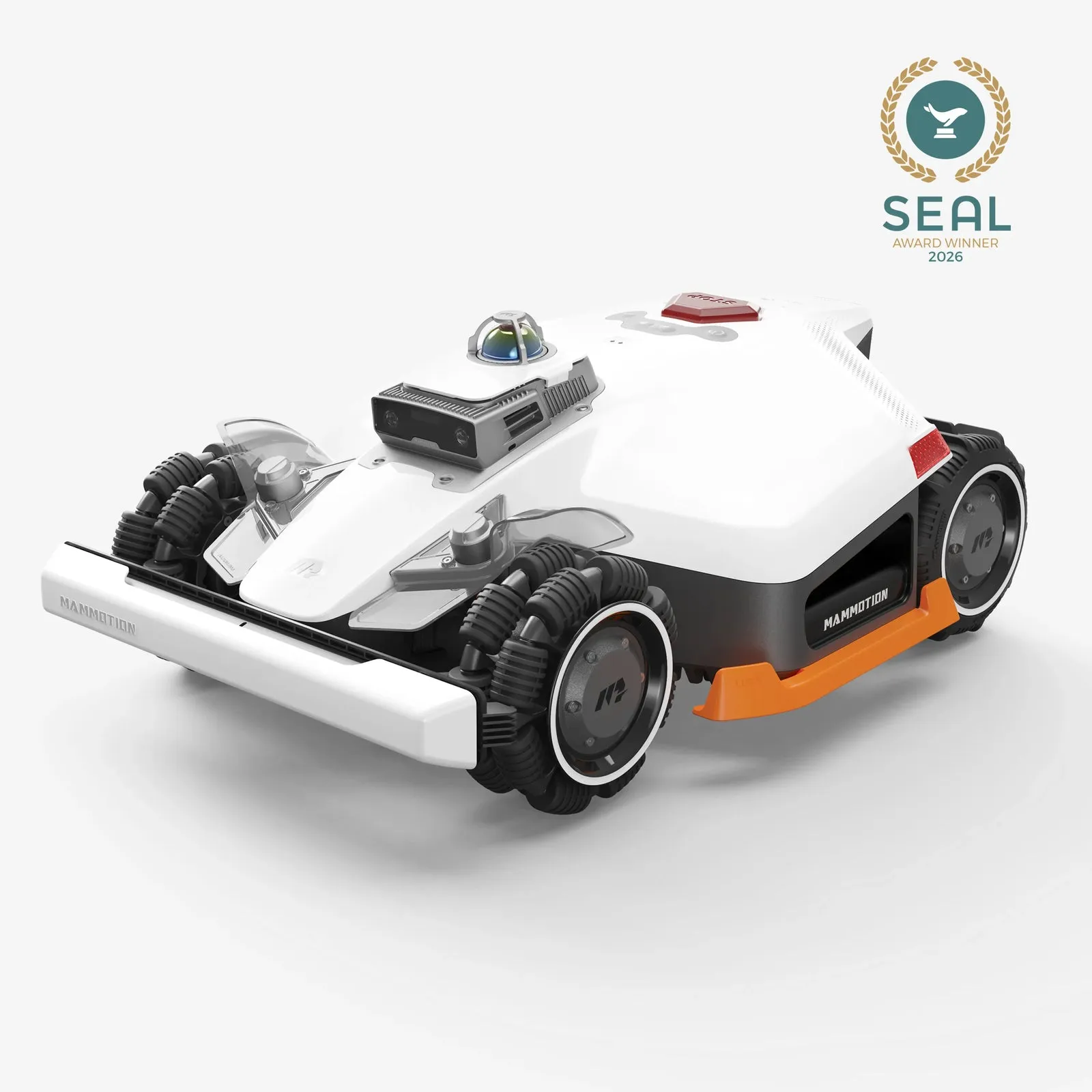
Mammotion
Mammotion LUBA 3 AWD
Model: LUBA 3 AWD (5000H)
The slope benchmark. All four wheels are independently driven, which lets it clear an 80% grade where two-wheel-drive mowers slip and stall. Its Tri-Fusion navigation (360-degree LiDAR, NetRTK satellite, and AI vision) holds position even under tree cover, where pure RTK drifts, which matters because hilly yards are often the tree-lined ones. It is expensive and the app has a learning curve, and there is one documented catch: its skid-steer turning can scuff soft, cool-season turf at the turn points, with reviewers noting visible marks on fescue after about ten days (self-repairing bermuda and zoysia hide it). On terrain alone nothing mainstream beats it. We cover the slope performance and the turf trade-off in depth in our Mammotion LUBA 3 AWD review. The pick if your slope is genuinely steep and you want one machine that also handles area.
Husqvarna
Husqvarna Automower 535 AWD EPOS
Model: Automower 535 AWD EPOS
Husqvarna's all-wheel-drive, wire-free EPOS mower for properties with real grades; the company rates its AWD line around 70% and it is built for rough, steep terrain. The reason to choose it over the LUBA is support: Husqvarna's dealer network has serviced Automowers in the US for over a decade, which Mammotion's still-young support cannot yet match. The trade-off is that it is sold and installed through a dealer rather than priced online, so budget for a quote. The buy if you want the established service story behind a slope-capable machine.
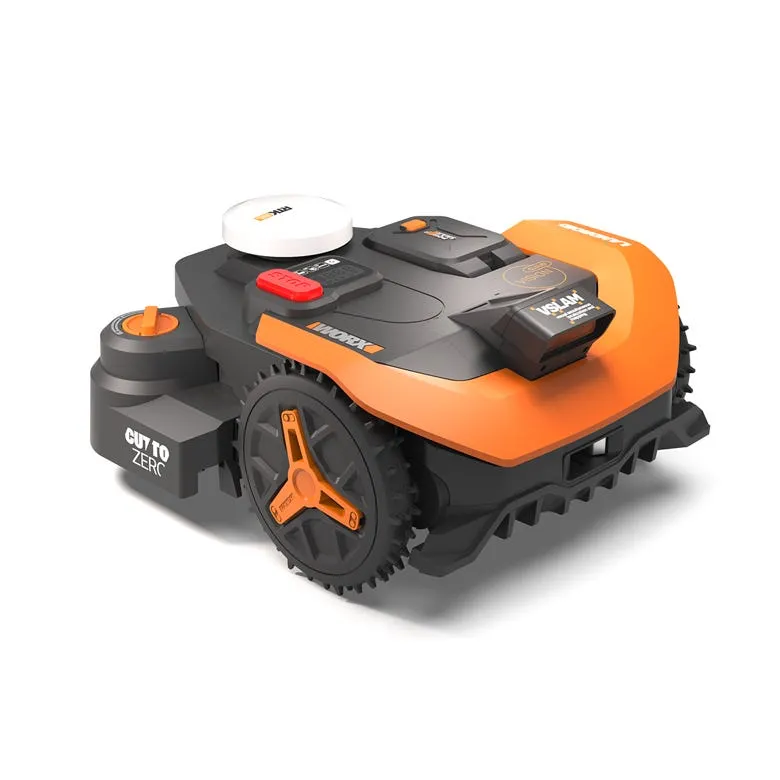
Worx
Worx Landroid Vision Cloud (WR320)
Model: Landroid Vision Cloud (WR320)
Not an AWD machine, so be honest about its ceiling: it is rated to about 30% grade, which covers gentle and moderate slopes but not a real hillside. If your yard rolls rather than climbs, it is far cheaper than the AWD options and brings RTK Cloud navigation and AI obstacle avoidance up to half an acre. Push it onto a steep bank and it will slip; keep it on moderate grade and it is the value pick. Worx sells larger variants in the same Vision Cloud line if your yard outgrows the WR320.
A flat lawn is easy. Almost any robot mower will handle it. A slope is where most of them fail, and where the buying decision actually matters. Drop a two-wheel-drive mower on a real bank and it does one of three things: stalls partway up, spins its wheels and scuffs the grass, or slides sideways and leaves stripes uncut. The mowers that climb hills are a specific, smaller group, and they are built differently.
The single thing that separates a hill-capable mower from the rest is all-wheel drive. Beyond that, the buying decision comes down to reading slope ratings honestly and leaving yourself a margin.
How to read a slope rating before you trust it
Manufacturers publish a maximum grade as a percentage. A 100% grade is 45 degrees; an 80% grade is about 39 degrees. That published figure is a best case, measured on dry, healthy turf in controlled testing.
Real yards are not a best case. Wet grass, morning dew, leaf litter, and soft ground after rain all cut traction, and reviewers who test on real slopes find that conditions typically knock 5 to 10 percentage points off the rated figure. So the rule is simple: measure your steepest slope, then buy a mower rated at least 5 to 10% above it. A yard with a 45% slope is not a comfortable match for a mower rated at exactly 45%.
Why all-wheel drive is the dividing line
Two-wheel-drive robots, which is most of the market, top out around 20 to 30% grade. Past that they lose traction on the undriven wheels and either stall or slip. All-wheel drive puts power to all four wheels, and that is what lets a mower like the LUBA 3 AWD climb an 80% bank. If your steepest slope is under 30%, a good two-wheel model saves you money. If it is steeper, all-wheel drive is not optional, it is the whole point.
The honest edges
Two things worth knowing before you buy. First, the newest entrant: Segway’s Navimow X4 series is rated to an 84% grade (40 degrees), edging out the LUBA, and its Xero-Turn steering is built to pivot without scrubbing the turf, which directly addresses the LUBA’s turn-scuffing issue. It sits a step above the LUBA on price. The catch is that it is new, so long-term, real-world slope and reliability reports are still thin; we are not ranking it as a pick yet, but if turf damage at turns is your concern, it is the one to watch. Second, navigation on shaded hills: pure RTK positioning can drift under tree cover, and hilly yards are often the tree-lined ones, so a multi-sensor system that fuses RTK with vision or LiDAR is worth the premium on a shaded slope.
For the full lineup across yard sizes and flat lawns, see our main robot lawn mower guide. But if your problem is a hill, start with the Mammotion LUBA 3 AWD for a genuine slope, the Husqvarna 535 AWD EPOS if dealer support matters more than price, and the Worx WR320 only if your slopes are moderate.
Frequently asked questions
What slope can a robot mower actually handle?
Do I really need all-wheel drive for a hill?
What is the steepest robot mower in 2026?
Will a robot mower slip and tear my turf on a slope?
Does tree cover affect a wire-free mower on a sloped yard?
Sources
Every claim in this guide that isn't first-person experience is traceable to one of the sources below. URLs verified at publication; some may rot. Let us know if so.
- Best Robot Lawn Mowers for Steep Slopes and Hills (2026) · Smart Home Explorer
- Best Robot Mowers for Steep Slopes (40%+): Spec Guide · Robot Mower Specs
- Mammotion LUBA 3 AWD: specifications and slope rating · Mammotion
- Husqvarna Automower 535 AWD EPOS · Husqvarna