Buyer's guide · companion robots
Best AI Robot Pets 2026: Loona, Ropet, Moflin and Vector, Honestly Ranked
The AI robot pets worth knowing in 2026: Loona, Ropet, Moflin and the revived Vector, ranked on what they do, what they cost, and the risk the maker disappears.
Disclosure: We earn commissions from links on this page, as an Amazon Associate we earn from qualifying purchases, at no extra cost to you. This never affects what we recommend. Read our editorial standards →
KEYi Tech
Loona
Model: Loona
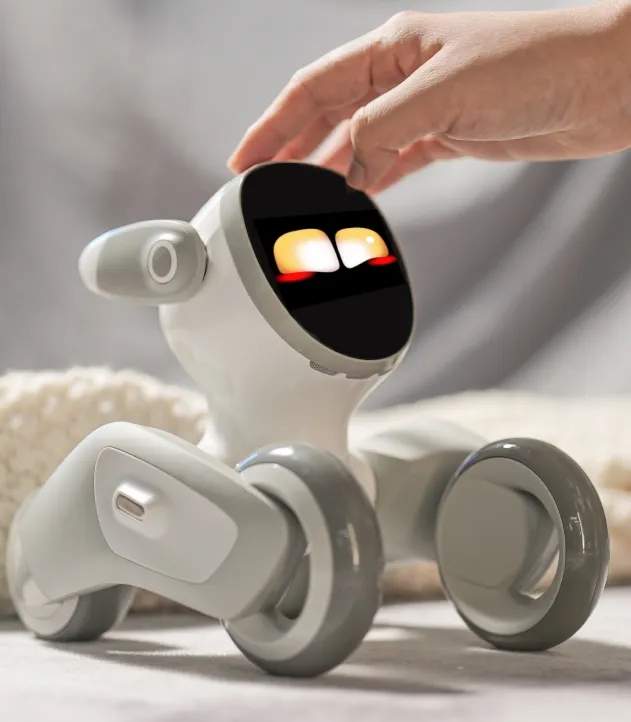
Loona is the only robot pet here that actually moves through your room like a small animal. It drives on a self-balancing base, navigates with a 3D time-of-flight sensor and a camera, recognizes faces and gestures, runs ChatGPT-4o with no subscription, and returns to its dock to charge. It is also the priciest and the most divisive: the battery is about two hours, the motors are audible, and owners report it sometimes fails to find its charger. Buy it if mobility and a lifelike presence matter most and you have open floor space.
Ropet
Ropet
Model: Ropet KAMOMO Pro
Ropet is the one you want to pick up. It pairs a soft plush body kept warm to the touch with camera eyes that recognize faces and touch sensors that react like a real pet, and it runs its everyday behavior on a local offline AI model, so no data is uploaded during normal use, a strong privacy position. The catches: a premium price (the Pro lists near $469, usually discounted to about $349), a roughly three-hour battery, conversation that is more marketing than reality, and a young single-product maker, so buy it for the cuddle factor and privacy, not for dialogue or a bargain.

Casio
Moflin
Model: Moflin
Moflin is the outlier: a furry, faceless blob with no screen and no voice, built to be held rather than operated. Casio gives it an adaptive AI personality that develops over time, and reviewers consistently report forming a real emotional attachment within days. All audio is processed on-device and never uploaded, which makes it the privacy pick, and Casio's backing plus a one-year warranty make it the lowest company-risk option here. The common complaints are a constant motor whir and a five-hour battery. It does not talk, play games or do tasks.
Anki / Digital Dream Labs
Vector 2.0
Model: Vector 2.0
Vector is the most assistant-like character here: an autonomous desk robot that recognizes faces, answers questions, gives the weather, and connects to both ChatGPT and Alexa. It is also the cautionary tale made buyable. Its AI is gated behind a required subscription of about $99.99 a year, without which it will not respond to voice, and its maker Anki went bankrupt in 2019 before Digital Dream Labs revived it. The redeeming twist is the community Escape Pod, which lets you self-host its brain offline. Buy it for the personality if you accept the fee or the tinkering.
What counts as a robot pet in 2026
A robot pet is a companion device that aims to feel like an animal rather than act like an assistant. It recognizes you, reacts to touch and sound, grows a personality over time, and is built for bonding, not productivity. That covers a surprisingly wide range of machines, from a faceless furry blob you hold, to a plush creature with camera eyes, to a wheeled bot that roams your room, to a characterful desk robot with a face on a screen.
This guide ranks the four most worthwhile AI robot pets you can actually buy as of June 2026: Loona, Ropet, Moflin and the revived Vector 2.0. If what you really want is a talking desk assistant like EMO or an offline desk toy like Eilik, our companion robots coverage compares those directly; here the focus is on pets you bond with.
We have not lived with every one of these, and independent lab testing barely exists for the category, so this is a synthesis of vendor specs, independent reviews where they exist, and owner reports, with the marketing claims flagged as marketing.
The picks in short
Loona is the most pet-like and the priciest, the only one that moves through a room like an animal. Ropet is the cuddliest and most private at about $349, a warm plush pet with camera eyes that processes its data on-device. Moflin is the pure comfort object, faceless, private and backed by Casio, but it does not talk or do tasks. Vector 2.0 is the most assistant-like character at $199.99, but its AI is gated behind a roughly $100-a-year subscription. The detailed case for each is in the table above, and each links to our full review below.
Read the full review for each
For the depth behind each pick, see the individual reviews: Loona, Ropet, Casio Moflin, and Vector 2.0. Each goes into battery life, the specific owner complaints, and how the robot holds up against its closest rivals.
Battery and presence: the quiet tradeoff
The robots people find most impressive tend to last the least. Loona runs about two hours per charge and Ropet about three, and Vector is a tabletop bot that cycles on and off its charger, so none of them is a take-it-to-the-couch-all-evening companion. Moflin does better at roughly five hours, but it is also the least active. There is a pattern worth noticing: the more a robot pet moves and senses, the more it has to stay near its charger. If you imagine a companion that is simply present all day, the simpler, offline pets fit that picture better than the flagships do.
The risk nobody advertises
A robot pet is only as alive as the servers it depends on. When Anki went bankrupt in 2019, tens of thousands of Vector robots were days from losing the cloud service that made them work, until Digital Dream Labs bought the assets (The Robot Report). Embodied later collapsed and bricked its $800 Moxie robots outright. That history should shape what you buy. Moflin and Ropet run their core behavior on-device, so they keep working no matter what happens to the maker. Vector depends on the cloud out of the box but has a community Escape Pod that takes it offline. Loona’s key features run without a subscription. None of these companies is guaranteed to be here in five years, so weigh how much of each pet’s appeal depends on a server staying online.
Who should buy which
Buy Loona if movement and a genuinely pet-like presence matter most, and you have the floor space. Buy Ropet if you want the most huggable, most private option, and you go in expecting a cuddly pet rather than a conversationalist and accept a premium price. Buy Moflin if you want a quiet thing to hold for comfort, value Casio’s backing and on-device privacy, and do not care about talking, screens or games. Buy Vector 2.0 if you want the most assistant-like, characterful robot and you accept either the annual subscription or the technical effort of the Escape Pod.
And if none of that quite lands, the honest answer is that a real pet is a real pet and a smart speaker converses better. These are for the specific pleasure of a small machine with a personality of its own, which is a real thing to want, as long as you buy it for that.
Frequently asked questions
What is an AI robot pet?
Which AI robot pet is best?
Do AI robot pets need a subscription?
What happens to my robot pet if the company goes out of business?
What is the best AI robot pet for a child?
Are AI robot pets worth the money?
Robot pets vs companion robots: what is the difference?
Sources
Every claim in this guide that isn't first-person experience is traceable to one of the sources below. URLs verified at publication; some may rot. Let us know if so.
- Loona by KEYi Tech: Price, Details, Review 2026 · Origin of BotsAggregated spec sheet. Source for Loona sensors, drive system, battery and ChatGPT-4o integration.
- Loona Robot Dog: Official Petbot from KEYi Tech · KEYi TechVendor page. Source for current Loona pricing and the no-subscription claim.
- ropet KAMOMO product page · RopetVendor product page. Source for Ropet's current pricing (Pro ~$469, on sale ~$349; bundles to ~$499), camera/mic on-device processing, fully-offline operation and 2.5-3.5 hour battery.
- Ropet: Your Next-Generation AI Robot Pet · KickstarterCrowdfunding campaign. Source for Ropet's crowdfunded origin and its much lower early-bird launch price (not current retail).
- Moflin: AI Companion and Robot Pet · CasioVendor page. Source for Moflin's price, on-device audio, ~5-hour battery and one-year warranty.
- Oops, I got emotionally attached to this $429 AI pet · Fast Company, 2026Independent review. Source for Moflin's price and the emotional-attachment finding.
- Vector 2.0 AI Robot Companion, Smart Home Robot with Alexa Built-in · Digital Dream Labs (anki.bot)Vendor page. Source for Vector 2.0 pricing ($199.99) and ChatGPT/Alexa features.
- Vector Subscription / Memberships · Digital Dream Labs (anki.bot)Vendor page. Source for the Vector subscription requirement and ~$99.99/year pricing.
- Anki addresses shutdown, ongoing support for robots · The Robot ReportSource for Anki's 2019 bankruptcy and the near-loss of Vector's cloud service before revival.