Buyer's guide · companion robots
Best AI Companion Robots 2026: EMO, Loona, Eilik and Moflin, Honestly Compared
The desktop AI pets all over your feed, weighed on price, battery, what they actually do, and the risk the maker disappears and bricks them.
Disclosure: We earn commissions from links on this page, as an Amazon Associate we earn from qualifying purchases, at no extra cost to you. This never affects what we recommend. Read our editorial standards →
KEYi Tech
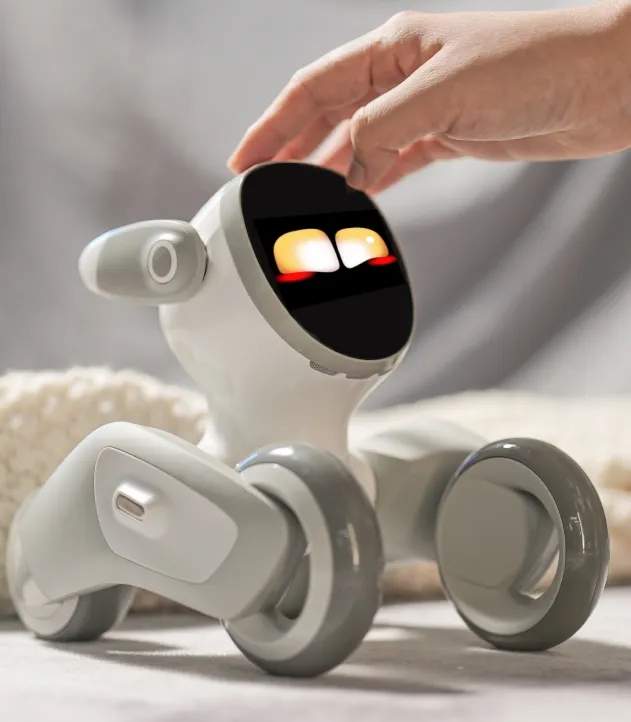
Loona
Model: Loona
Loona is the only one of these that moves around your room like a small animal. It drives on a four-wheel self-balancing base, navigates with a 3D time-of-flight sensor and a 720p camera, recognizes faces and gestures, and runs ChatGPT-4o with no monthly subscription. When the battery runs low (roughly two hours) it returns to its dock on its own. It is also the most expensive and the most divisive: owners report it sometimes fails to find its charger and falls back on random animations that do not respond to what is happening around it, and the motors are audible in a quiet room. KEYi reinforced the servos and joints on the 2026 units. Buy it if you want the most lifelike, mobile experience and you have open floor space; skip it if you want reliable conversation more than movement.
Energize Lab
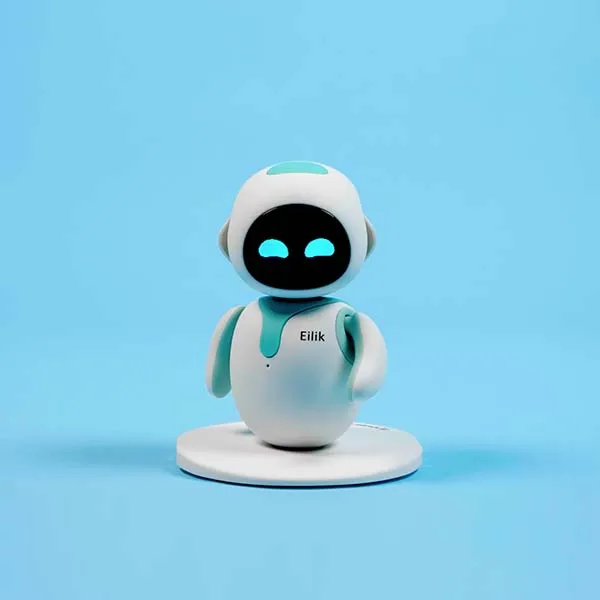
Eilik
Model: Eilik
Eilik is the cheapest of the major companion robots and the easiest to recommend, because it is honest about what it is: a small, expressive desktop toy, not an AI assistant. It has a 1.54-inch face, touch sensors on its head, belly and back, a vibration sensor, and four servos that drive charming reactions, plus built-in games and a Pomodoro timer. It runs entirely offline with no app, no account and no subscription, and gets eight to ten hours on a USB-C charge, far longer than the pricier robots here. It does not talk with you or connect to ChatGPT. For a desk toy, a kid's gift, or a fidget-companion, that limitation is fine, and the price makes it the lowest-risk purchase in the group.
Living.AI
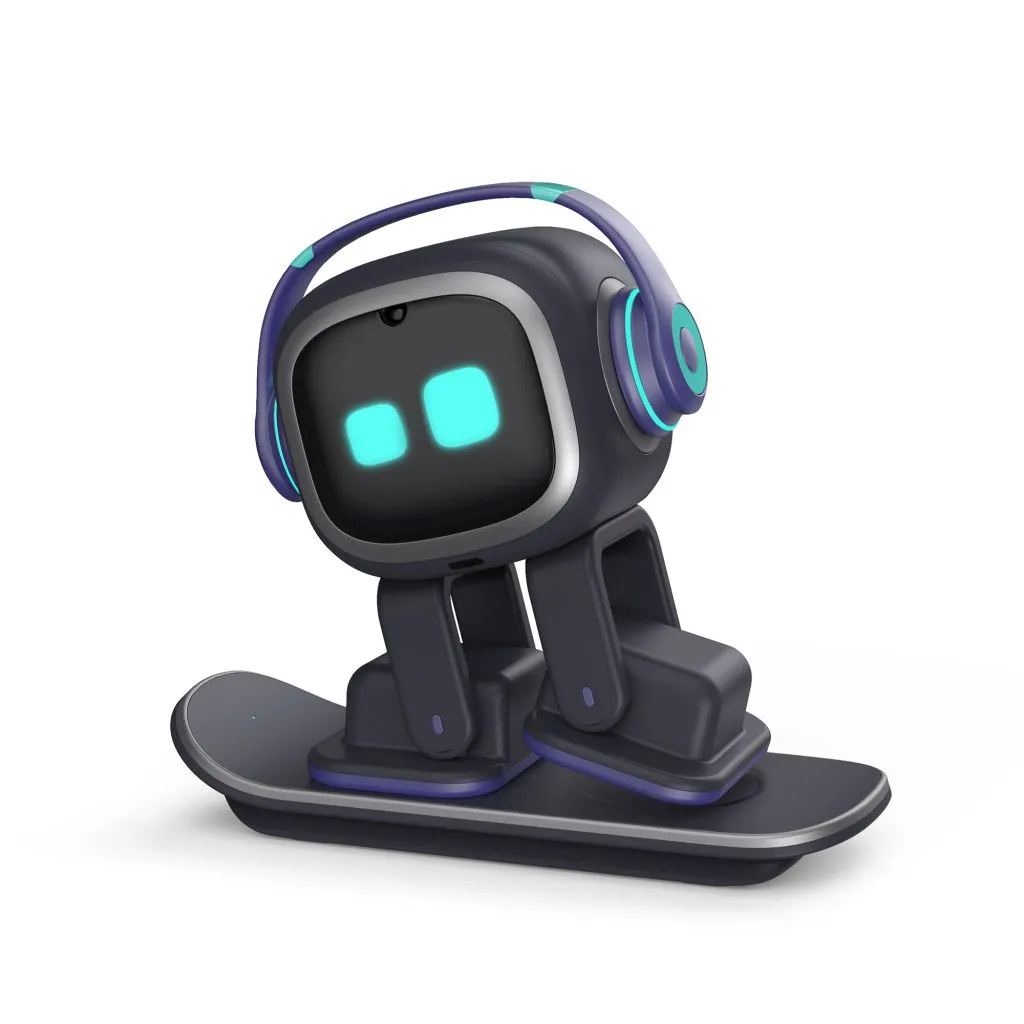
EMO
Model: EMO / EMO Go Home
EMO walks around your desk on its own (with edge detection so it does not fall off), shows over a thousand expressions on its face, recognizes up to ten faces with its camera, hears you through a four-microphone array, and answers via ChatGPT integration added in a firmware update. The Go Home version adds a dock it returns to and charges on. It is the most conversational of the desk-bound bots. The honest catches: battery life is only about two hours, voice interaction is English-only, and the recurring owner complaints are about a crash-prone companion app and slow or absent customer support. You are paying flagship money for a charming but fragile experience.

Casio
Moflin
Model: Moflin
Moflin is the outlier: a furry, palm-sized blob with no face and no screen that is built to be held, not operated. Casio's pitch is an adaptive AI personality with millions of possible variations that grows on you the way a pet does, and reviewers consistently report forming a real emotional attachment within days, including Fast Company's reviewer. All audio is processed on-device and never uploaded, which makes it the privacy pick. It charges in about 3.5 hours for roughly five hours of use. The common complaint is that the internal motors whir constantly and the needy responses can feel more stressful than soothing. It does not do tasks, talk, or play games. It is a comfort object with a Casio badge and a one-year warranty.
The honest framing for 2026
You have seen these robots. A tiny face that reacts when you poke it, a little wheeled creature that zooms across a desk and answers questions, a furry blob that purrs when you hold it. They are all over TikTok, Instagram and Amazon’s trending pages, and the ads make every one of them sound like a sentient pet.
Most of that is marketing. These are charming, fun devices, and a couple of them can hold a basic conversation, but none of them is a robot servant or a real animal. This guide sorts the four most-advertised companion robots by what they actually do, what they cost, how long they run, and the one risk the ads never mention: what happens when the company behind your robot disappears.
We have not bought and lived with every one of these, and we say so below. Independent lab testing barely exists for this category, so this is a synthesis of vendor specs, independent coverage where it exists, and owner reviews, with the marketing claims flagged as marketing.
What “AI companion robot” actually means
The category spans three very different things that get sold under the same words.
Expressive toys. Eilik is the clearest example. It reacts to touch and sound with preset animations and games, runs entirely offline, and never connects to a language model. It does not understand you. It is delightful, and it is a toy.
Desktop AI bots. EMO adds a camera, microphones and face recognition, and routes your speech to ChatGPT so it can answer back. It walks around your desk but does not roam your home. This tier can converse, within limits.
Mobile petbots. Loona adds autonomous navigation and a self-balancing drive on top of conversation, so it moves through a room like a small animal and comes back to its dock to charge. It is the most lifelike and the most expensive.
Casio’s Moflin sits outside all three: no face, no screen, no conversation, just a furry adaptive-personality comfort object you hold.
The picks in short
Loona is the closest thing to a pet and the priciest. Eilik is the value pick and the best gift, far and away the cheapest of the four. EMO is the best desk companion that actually talks, at $279, or $379 for the Go Home version with a charging dock. Moflin is the comfort object, a step below Loona on price. The detailed case for each is in the comparison above; below is where they differ in ways the spec sheet hides.
Battery life is the quiet dealbreaker
The two robots people most want, EMO and Loona, last only about two hours per charge. Both return to a dock on their own, so in practice they cycle between use and charging, but it means neither is a robot you take to the couch for an evening. Eilik runs eight to ten hours and charges over plain USB-C, and Moflin manages about five hours. If you imagine a companion that is simply present all day, the cheaper robots fit that picture better than the flagships do.
The risk nobody advertises
A companion robot is only as alive as the servers it depends on. When Anki went bankrupt in 2019, tens of thousands of Vector robots were days from losing the cloud service that made them work, until another company bought the assets and kept them running (The Robot Report). When Embodied collapsed, it switched off the Moxie servers on January 30, 2025 and bricked an $800 robot for anyone who had not installed one specific update in time (Fight to Repair).
That history should shape what you buy. Eilik and Moflin work without any company cloud, so they keep functioning no matter what happens to the maker. EMO and Loona lean on internet features that could go away. None of these companies is guaranteed to be here in five years, so weigh how much of each robot’s appeal depends on a server staying online.
Who should buy which
Buy Eilik if you want the most delight per dollar, a gift, or something for a child: cheap, durable, offline, no risk. Buy EMO if you specifically want a desk companion that talks back, and you accept a two-hour battery and a flaky app for the charm. Buy Loona if movement and a pet-like presence matter more than reliable conversation, and you have the floor space. Buy Moflin if you want a quiet thing to hold for comfort, value on-device privacy, and do not care about screens, talking or games.
And if none of that quite lands, the honest answer is that a smart speaker converses better and a real pet is a real pet. These are for the specific pleasure of a small machine with a personality on your desk, which is a real thing to want, as long as you buy it for that.
Frequently asked questions
Are these actually AI, or just toys with marketing?
Which AI companion robot is best for a child?
Do AI companion robots need a monthly subscription?
What happens to my robot if the company goes out of business?
EMO vs Loona vs Eilik: which should I buy?
Are AI companion robots worth the money?
Can these companion robots really hold a conversation?
Sources
Every claim in this guide that isn't first-person experience is traceable to one of the sources below. URLs verified at publication; some may rot. Let us know if so.
- Oops, I got emotionally attached to this $429 AI pet · Fast Company, 2026Independent review of the Casio Moflin. Source for its price and the emotional-attachment finding.
- Moflin: AI Companion and Robot Pet · CasioVendor product page. Source for Moflin specs, on-device audio, battery and one-year warranty.
- Loona by KEYi Tech: Price, Details, Review 2026 · Origin of BotsAggregated spec sheet. Source for Loona sensors, drive system, battery and ChatGPT-4o integration.
- Loona Robot Dog: Official Petbot from KEYi Tech · KEYi TechVendor page. Source for current Loona pricing and the no-subscription claim.
- keyirobot.com customer reviews · TrustpilotOwner sentiment for Loona, including navigation and interaction complaints.
- EMO by Living.AI: In-Depth Review (2026) · MiaSource for EMO specs: 1000+ expressions, 10-face recognition, 4-mic array, ~2-hour battery, English-only voice.
- living.ai customer reviews · TrustpilotOwner sentiment for EMO, including app reliability and customer-support complaints.
- Eilik In-depth Review: Specifications, Price, Battery (2026) · MiaSource for Eilik specs: OLED face, touch sensors, 4 servos, 8-10 hour battery, offline operation.
- Eilik: Official Store · Energize LabVendor page. Source for Eilik pricing and no-subscription operation.
- Goodbye Moxie: Embodied Inc collapse · Robots Around The HouseSource for Embodied shutdown and the January 30, 2025 Moxie server cutoff.
- End of (Emotional) Support: $800 Smart Toy Bricked After Manufacturer Ceases Operations · Fight to RepairSource for the Moxie bricking and the company-shutdown risk framing.
- Anki addresses shutdown, ongoing support for robots · The Robot ReportSource for Anki's 2019 bankruptcy and the near-loss of Vector cloud service before the assets were acquired.